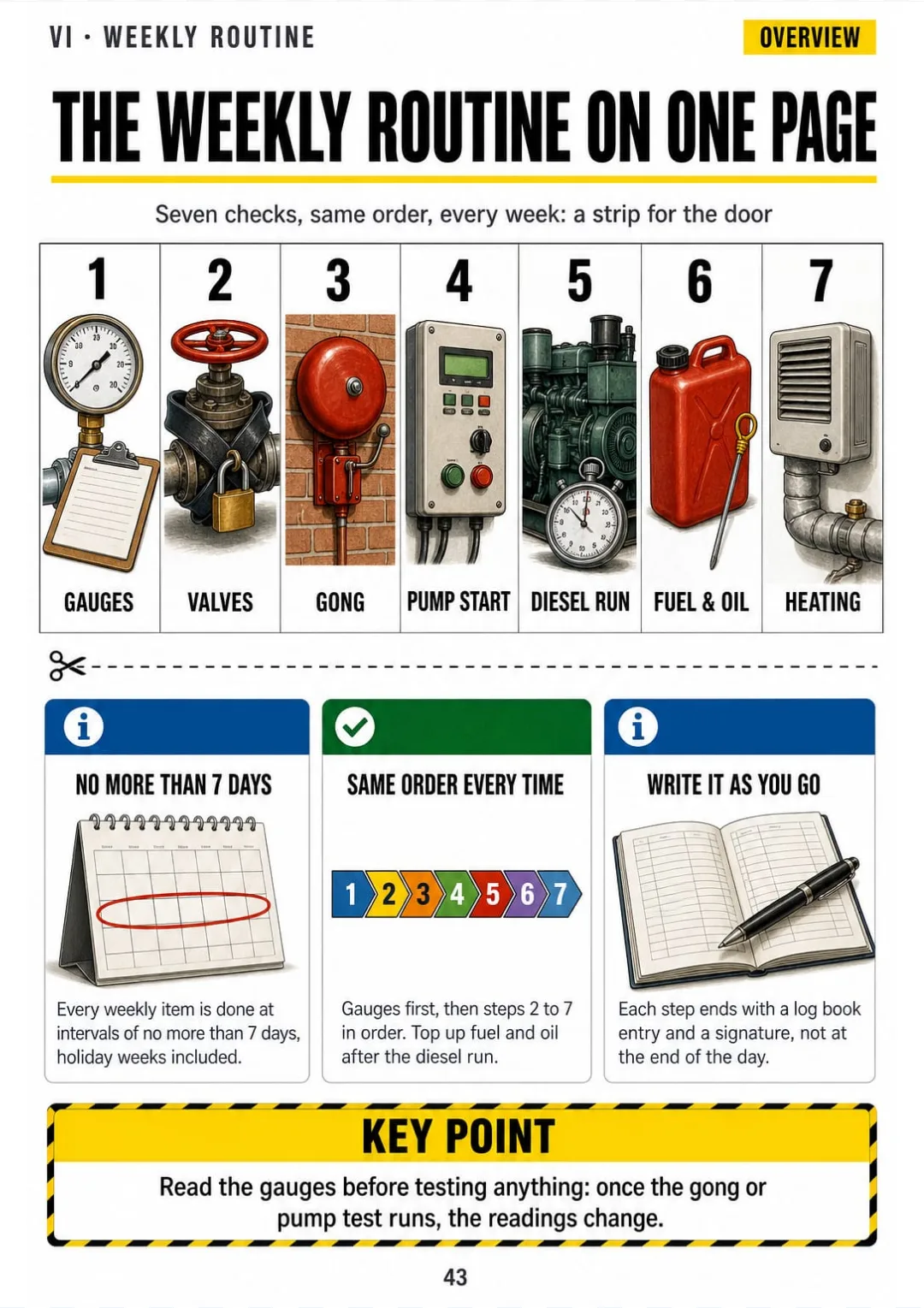
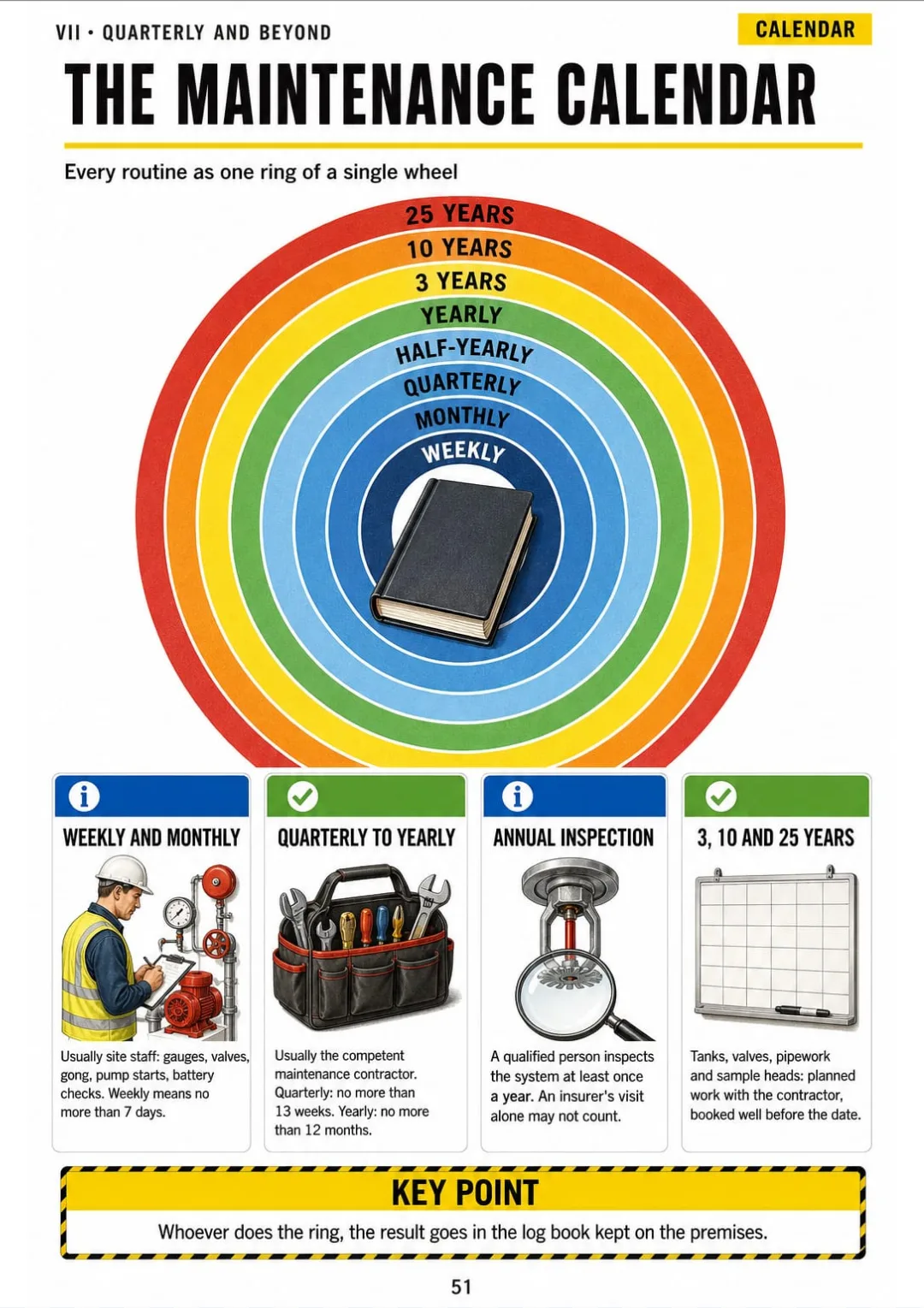
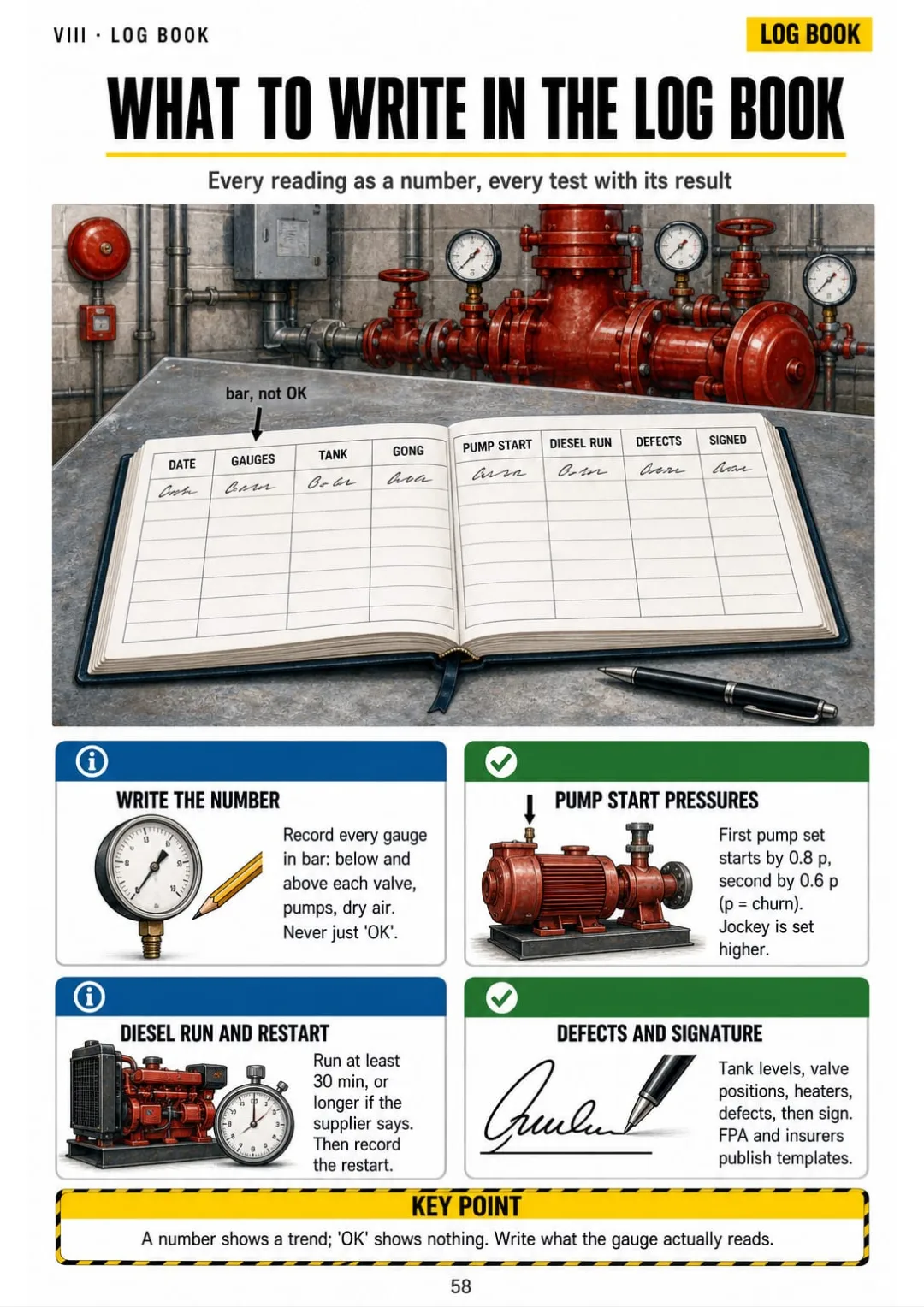
📄 Digital book in PDF · read it on your phone or print it
Wet, dry, alternate and pre-action installations, the valve set part by part, sprinkler heads and bulb colours, water supplies, pump start tests, the weekly routine, the maintenance calendar and the log book. Every topic has its own page: the drawing first, then what you need to remember. 64 illustrated pages.
🔒 Secure checkout · PDF by email · 30-day guarantee
Every page has one large drawing and a box with the readings, intervals and steps you need to know:


Swipe to see more →
These are real pages from the book. The table of contents is the full one: 8 parts and 60 topics.
You're standing at the valve set with the insurer's surveyor beside you. He points at the two gauges and asks why the one above the valve reads higher than the one below. You've done this test every week for years, and your mind goes blank.
It's not that you don't know the job. The standard and the O&M manual describe the valve set in paragraphs: alarm valve, main stop valve, drains, test valves and gauges in one long block, with no picture of which pipe goes where.

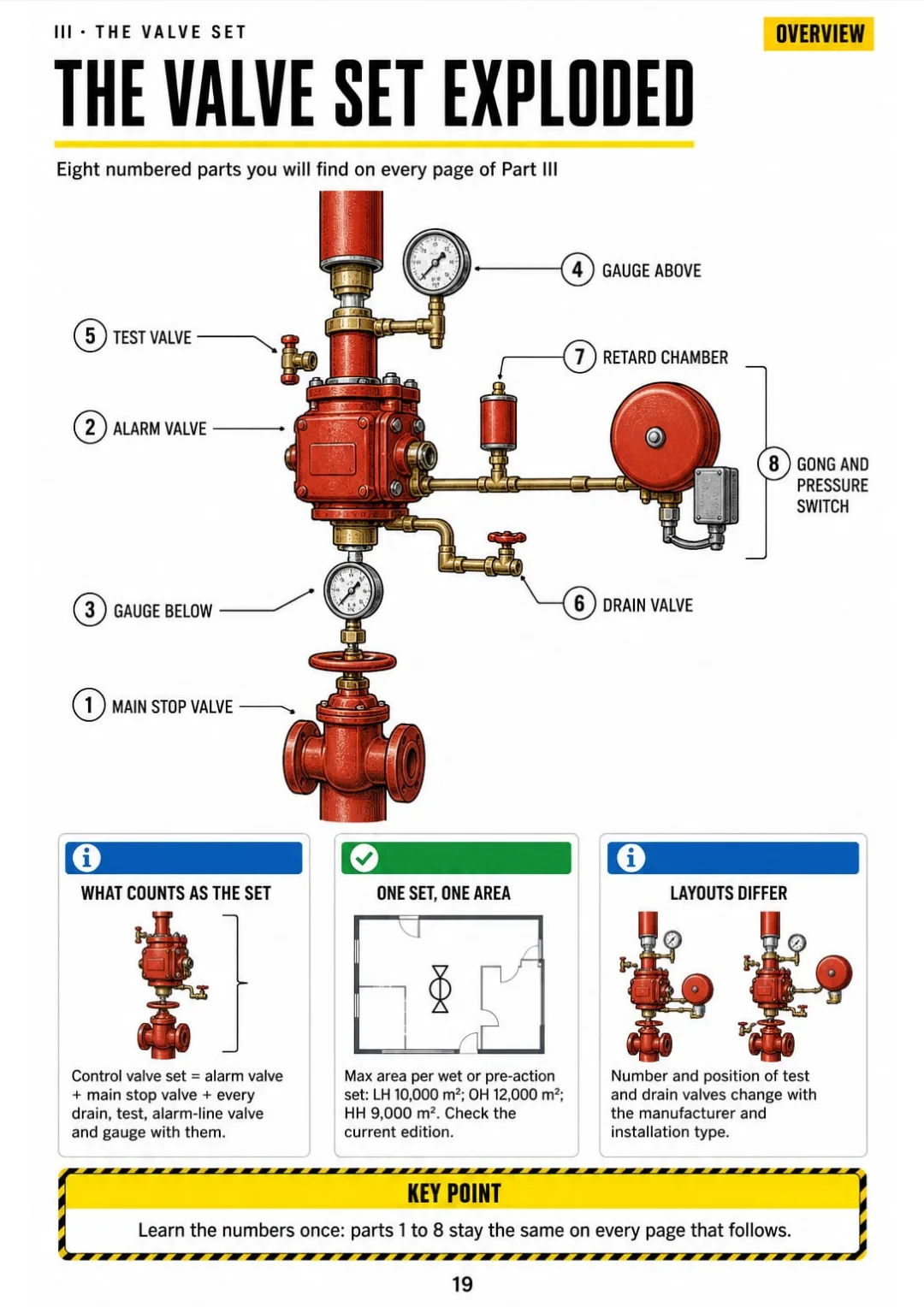
In the book, that same valve set is one page, drawn exploded, part by part: the main stop valve with its strap, the alarm valve, the gauge below and the gauge above, the drain and the alarm test valve, each one labelled with what it does.
The rest gets the same treatment, each on its own page: the retard chamber, the water motor gong, the pressure switch, the dry valve and its air, and the automatic pump start test.
Next time he points at the gauges, you know what each one is telling you and you say it without going back to the manual.

How a system works, the installations side by side, the valve set, sprinkler heads, water supplies and pumps, the weekly routine, the maintenance calendar and the log book: 64 pages, all illustrated
Think of it this way:
It's Monday morning, the weekly test is due and the pump cuts in later than last week. You need to know where to look before you sign the log book.
You open the page on the automatic pump start test and see it drawn: the pressure falling on the gauge, the point where the pump starts, and what to write down.

Same with the valve set, the bulb colours, the dry valve and its air, the storage tank and the maintenance calendar: each one on its own page.
Sprinkler Inspection Illustrated is 8 parts and 60 topics, all drawn, ending with the log book, how to handle an impairment, ten common defects and your own valve room card.
What you see drawn, you don't have to memorize.
Why only the heads over the fire open, the water's journey from tank to head, hazard classes, what the standard asks of the user, bar instead of psi and the words you hear in the valve room.
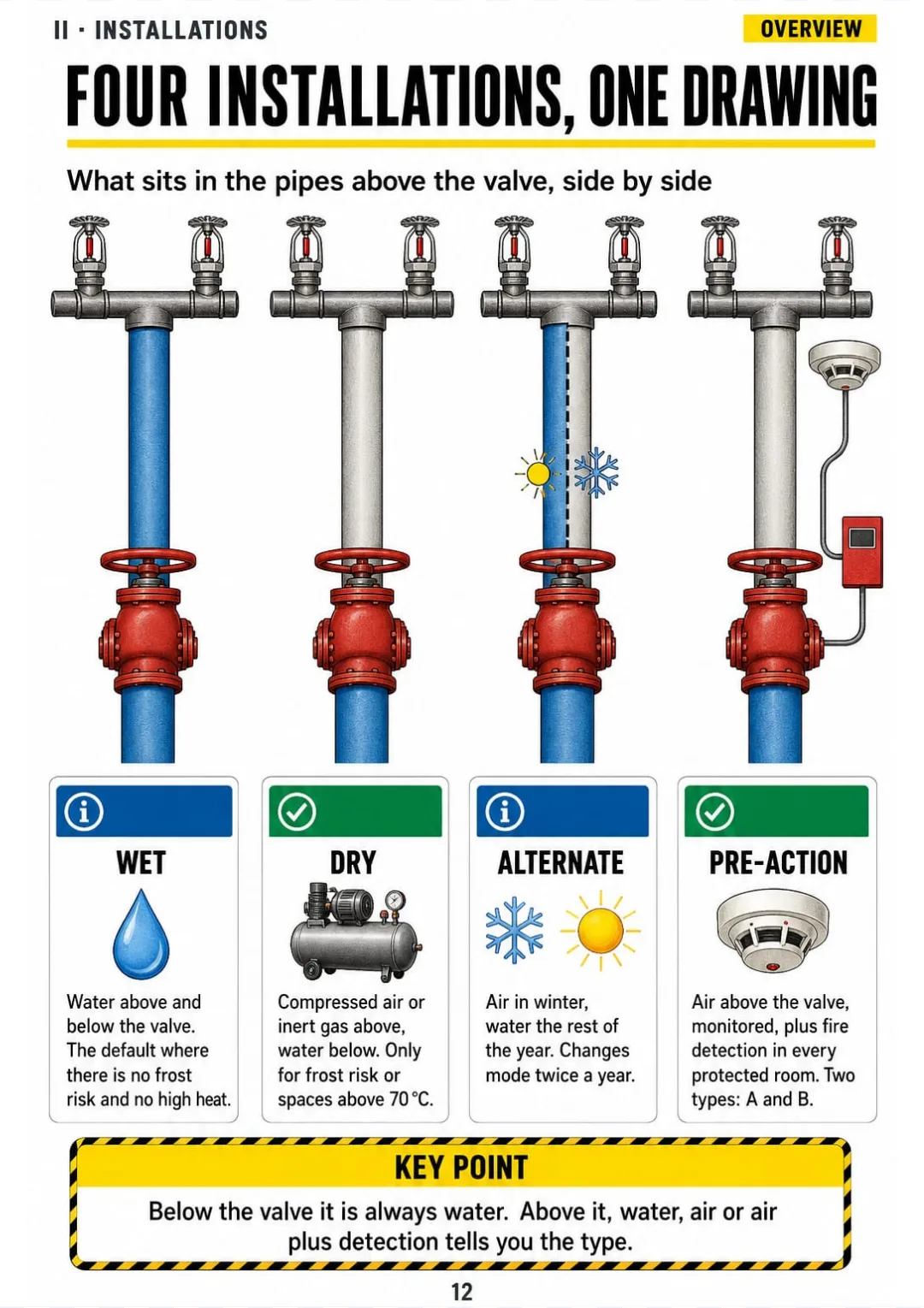
Wet, dry, alternate and pre-action in one drawing, then each one on its own, pre-action Type A and Type B, tail-end and subsidiary installations, and five clues to tell which one you have.
The valve set exploded, the main stop valve and its strap, inside the wet alarm valve, the two gauges, the retard chamber, the gong, pressure and flow switches, the dry valve, accelerators and exhausters.
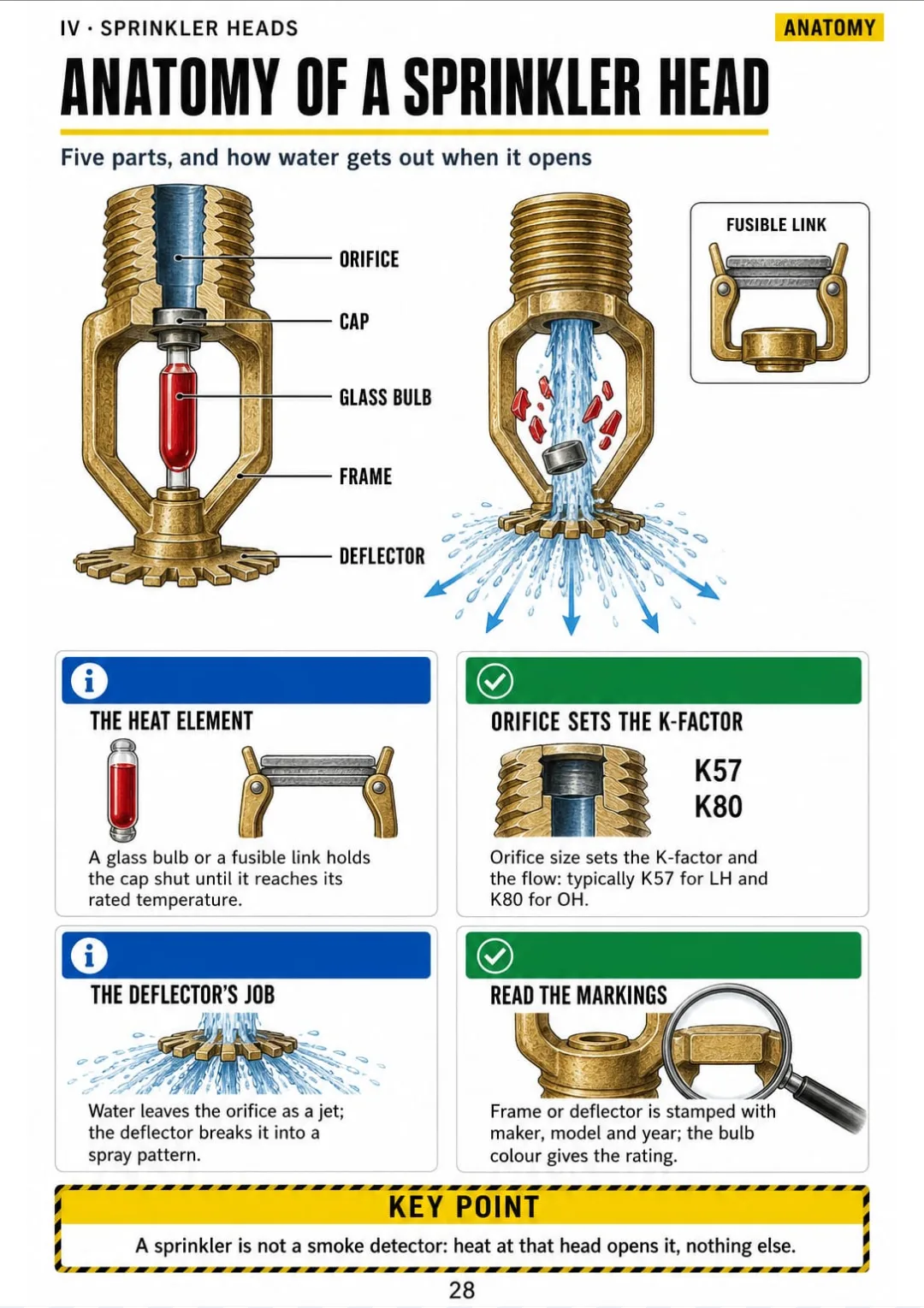
Anatomy of a head, bulb colours and temperatures, upright, pendent, sidewall and concealed, standard and quick response, clear space below the head, paint and damage, and the spare heads cabinet.
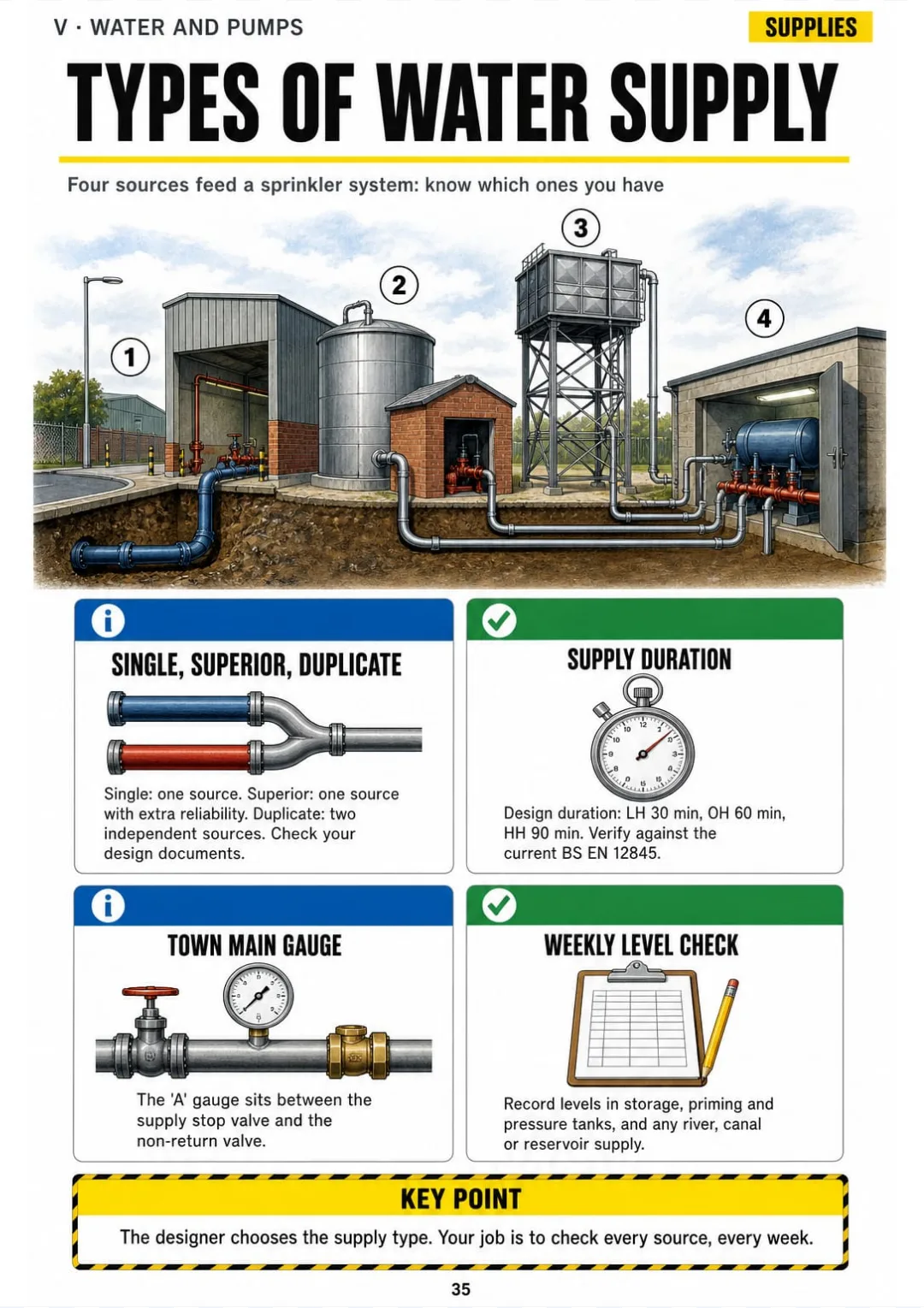
Types of supply, the tank and its float valve, electric and diesel pump sets, how a pump starts on falling pressure, the pump curve, the diesel engine, pump room conditions and controller panels.
The whole weekly routine on one page, then each step in order: gauges, stop valves, gong test, automatic pump start, diesel run, fuel and heaters. You sign the log book knowing what each reading means, and you see four reasons a pump starts late.
The maintenance calendar, the quarterly walk-round, half-yearly dry valves and remote alarms, the yearly flow test and diesel fail-to-start, and the three-, ten- and twenty-five-year checks.
What to write in the log book, planned and unplanned impairments, restoring after a shut-down, ten common defects, questions surveyors often ask and your own valve room card.
At the end of the book: Ten common defects, questions surveyors often ask and your own valve room card.
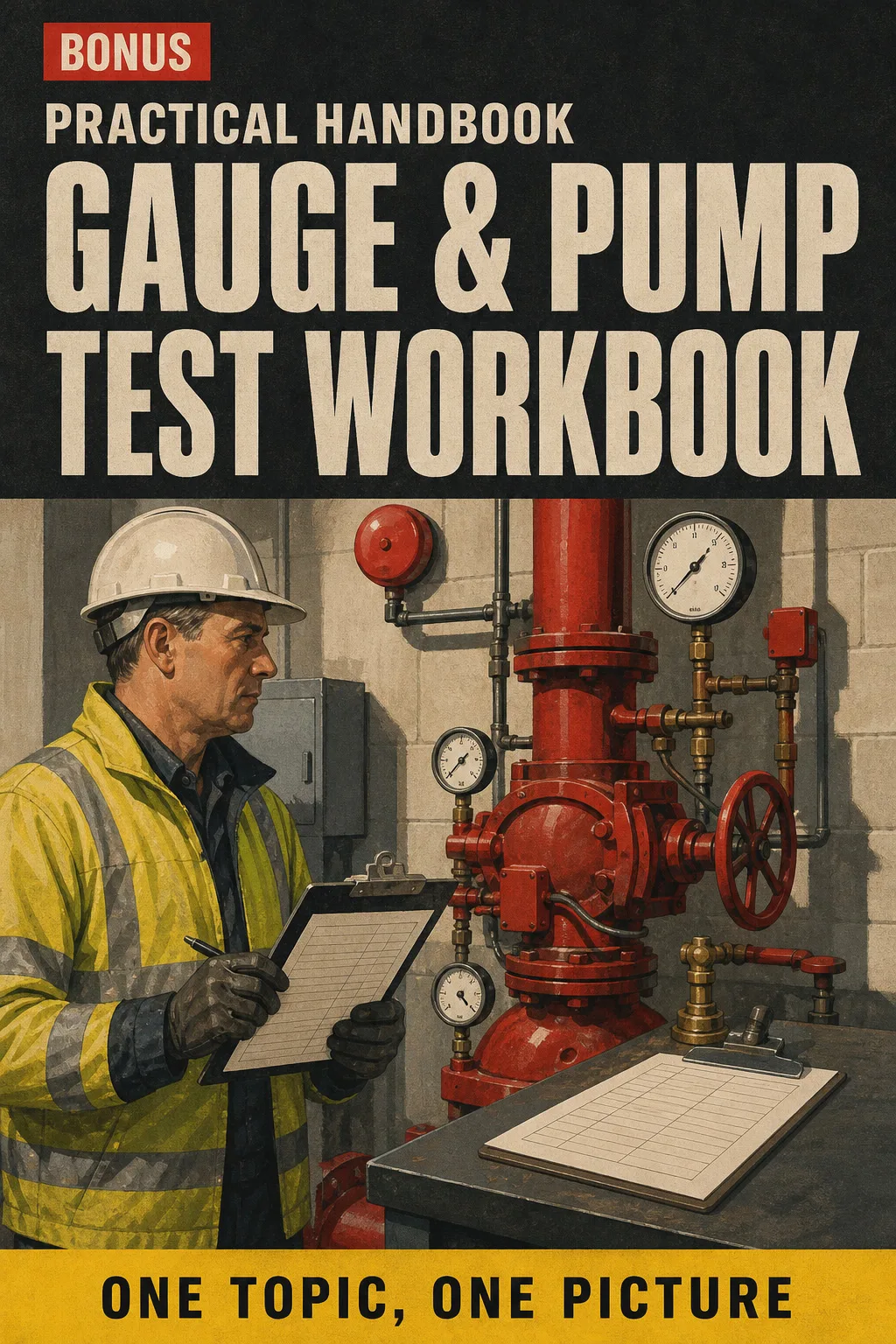

Worked exercises on reading installation gauges and pump start tests, with answers, so you can practise the numbers before you are standing in the valve room.

Bulb colours, temperature ratings and clearances below heads on printable cards, so you can check them at a glance on site.
📄 This is a digital PDF book sent to your email: nothing is printed or shipped.
PDF by email: We email you Sprinkler Inspection Illustrated as a PDF, together with the two free books. It's a single payment: no installments, no extra charges.
Coming from alarms or plumbing, you get the four installations and the valve set drawn part by part, so the valve room makes sense from the first week.
You check the routines, the gauge readings and the log book page by page, and you know what each reading means before someone asks.
You keep every routine in the same order, printed in the van or the pump room, and the colours and clearances at a glance.
📄 This is a digital PDF book sent to your email: nothing is printed or shipped.
Try Sprinkler Inspection Illustrated for 30 days, bonus books included.
We refund everything if the file won't open, if the book isn't what you see here, if you were charged twice or if the email doesn't arrive. Just email us.
You pay once. No subscriptions.
Yes. It isn't a beginner's book: it puts what you already do in a fixed order and shows why each gauge reads what it reads. If you're new to sprinklers, it starts from how one head opens.
It's checked against BS EN 12845:2015+A1:2019, the LPC Rules for Automatic Sprinkler Installations and the Fire Safety Order 2005 (Fire (Scotland) Act 2005 in Scotland). UK units in bar, not psi. Every number is flagged to check against the current edition and the manufacturer's manual.
No. It's an independent illustrated book, not affiliated with BSI, the FPA, LPCB or any insurer. It names the standard and the rules only to say what it's checked against. It doesn't come with a certificate or CPD hours: it's a reference to keep at hand.
No. It doesn't replace manufacturer's training, the system's O&M manual, your company's procedures or a competent sprinkler contractor. It's the drawn reference you keep beside them.
No. The gauge and pump test exercises are written for this book, with their answers, so you can practise the numbers.
As a PDF by email, to the address you enter at checkout. The 2 bonus books come the same way.
No. It's a one-off payment.
Yes. Print it at home or at a print shop and keep it in the van or the pump room.
You have 30 days. We refund everything if the file won't open, if the book isn't what you see on this page, if you were charged twice or if the email doesn't arrive: just email us.
No more rereading the standard without it sticking.
The valve set: you see it drawn, and that's it.
You walk into the valve room knowing where everything is.
Drawings make studying faster.
The book is right below.
One-time payment: US$ 27 · Guarantee: 30 days · PDF by email
YES, I WANT SPRINKLER INSPECTION ILLUSTRATED FOR US$ 27📄 This is a digital PDF book sent to your email: nothing is printed or shipped.